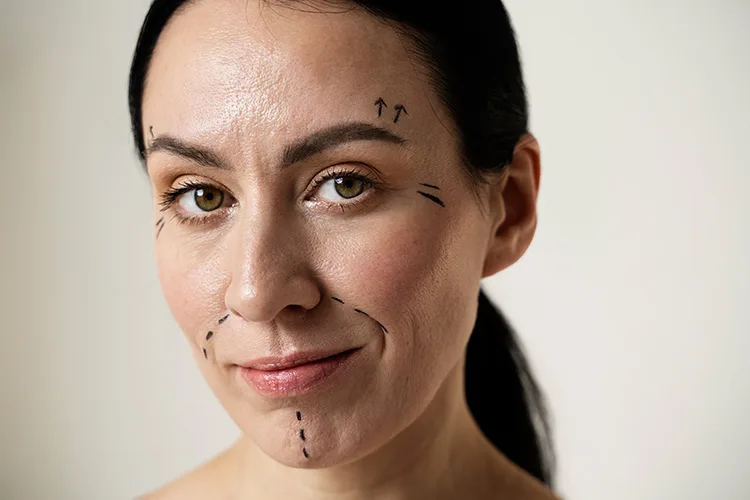
As we age, the nasolabial folds located on either side of the nose become more pronounced. They can give the face a tired and aged appearance. However, there are both at-home solutions and professional treatments available to help improve the appearance of nasolabial folds. These natural facial creases, which extend from the sides of the nose to the corners of the mouth, are also commonly known as smile lines. This area is one of the most active regions of the face. When we smile, laugh, or speak, our cheeks move upward, making these lines around the nose more visible. These folds are a natural part of our facial anatomy from a young age. However, while they are soft and subtle in youth, they gradually become deeper with age. Medical Aesthetics Physician Dr. Lida Çiteli, who provides treatments for patients and clients at her clinic in Istanbul, has compiled solutions to help improve the appearance of nasolabial folds.
Tercih ettiğiniz yapay zekâ aracında, yalnızca bu sayfadaki bilgilere dayalı kısa bir özet oluşturun.
Bu özet yapay zekâ tarafından üretilir, tıbbi tavsiye yerine geçmez. Kesin bilgi için hekiminize danışın.
Why Do Nasolabial Folds Develop?
The most important factor contributing to the development of nasolabial folds is the gradual loss of the skin's supporting structures over time. A decline in collagen and elastin production causes the skin to lose its firmness and elasticity, making the natural facial creases more noticeable.
Volume loss in the cheeks also plays a significant role in the prominence of nasolabial folds. The mid-face gradually loses fullness, making the transition between the sides of the nose and the mouth more pronounced. As cheek support decreases, the nasolabial folds become increasingly noticeable. As a result, the face may appear more tired or sad.
Facial expressions also contribute to the prominence of nasolabial folds. Smiling, talking, and actively using facial muscles cause this area to move repeatedly. Although facial expressions alone do not cause permanent lines, reduced skin elasticity allows these repetitive movements to leave lasting marks over time.
Among the external factors that negatively affect the skin, sun damage is one of the most significant. Ultraviolet (UV) rays accelerate collagen loss, causing the skin to become thinner, drier, and less elastic. Without adequate sun protection, nasolabial folds may become noticeable at an earlier age.
When it comes to skin aging, genetic factors are also highly important. Some individuals naturally have more prominent nasolabial folds. Bone structure, skin thickness, cheek volume, and habitual facial expressions all influence how early these folds appear and how deep they become.
What Can You Do at Home for Nasolabial Folds?
First of all, it should be noted that home skincare routines cannot completely eliminate the appearance of nasolabial folds. However, improving overall skin quality may help these lines appear softer and less noticeable. Therefore, maintaining a consistent skincare routine is essential.
The first step in your home skincare routine should be protecting your skin from the sun. A broad-spectrum sunscreen with a high SPF should be used throughout the year.
The second step is maintaining proper skin hydration. Moisturizing the skin with products containing hyaluronic acid and other hydrating ingredients helps the skin appear plumper and more elastic.
Retinol, retinal, and peptides should also be included in a long-term skincare routine. Vitamin A derivatives support skin renewal, while peptides help promote firmer and smoother-looking skin.
You may also perform facial massage or facial yoga to help the nasolabial area appear more refreshed and supported. However, avoid applying excessive pressure, massaging dry skin, or pulling on the skin. After applying a serum or moisturizer to create slip, perform gentle upward massage movements.
Finally, maintaining healthy sleep habits, drinking sufficient water, limiting smoking, and managing stress can reduce the negative effects on skin quality. Improving your overall lifestyle contributes to healthier skin and may help reduce the appearance of wrinkles.
Which Medical Treatments Can Be Used for Nasolabial Folds?
EMFACE
When treating nasolabial folds, it is not sufficient to focus only on the lines themselves. Mid-face support, muscle structure, and skin elasticity are also important considerations. EMFACE uses high-intensity electromagnetic energy to activate the facial muscles responsible for lifting the face, while radiofrequency technology helps improve skin quality. As the muscles that support the face become stronger, the appearance of the nasolabial folds may also become less noticeable. Depending on the individual's needs, this treatment may be performed alone or combined with dermal fillers and biostimulatory injections.
Skin Quality Treatments: Thermage FLX, Gold Microneedling, and Fractional Laser
Treatments that improve the quality of the skin in the nasolabial area can help soften the appearance of these folds. They promote skin tightening and renewal while strengthening support in the mid-face. These procedures help the skin appear firmer and more rejuvenated. By reaching the deeper layers of the skin, they support collagen production and accelerate the skin's natural renewal process, contributing to a smoother and healthier-looking complexion.
Mesotherapy and Skin Boosters
The prominence of nasolabial folds is influenced not only by volume loss and tissue laxity but also by reduced skin hydration and elasticity. Mesotherapy and skin booster treatments help improve skin hydration, radiance, and elasticity, resulting in a healthier appearance. Mesotherapy nourishes the skin by delivering vitamins, minerals, hyaluronic acid, and amino acids directly into the skin, while skin boosters provide intensive hydration that contributes to plumper, more elastic, and revitalized skin.
Morpheus8
In some individuals, volume loss is the primary factor contributing to the prominence of nasolabial folds, while in others, changes in the facial fat compartments and tissue heaviness play a greater role. Morpheus8 improves skin quality using microneedling radiofrequency technology. It helps tighten the tissues and enhances facial contours.
Combination Treatments
To achieve successful outcomes in the treatment of nasolabial folds, combination approaches are generally preferred over a single procedure. Energy-based technologies, biostimulatory injections, and treatments targeting volume loss may be combined. Biostimulatory injections, which help stimulate collagen production, improve skin quality and increase tissue support while complementing the effects of energy-based treatments.
Botox
Although Botox injections are not considered the primary treatment for nasolabial folds, low-dose Botox may be used as a supportive treatment in selected cases. Since incorrect application may cause asymmetry in mouth movements, it is extremely important that Botox be administered only in appropriate candidates using the correct technique and dosage. For this reason, it is advisable to choose a qualified and experienced medical aesthetics physician with a thorough understanding of facial anatomy.
Dermal Fillers
One of the primary treatment options for nasolabial folds is dermal filler injections. However, careful and individualized treatment planning is essential. In many cases, the prominence of the nasolabial folds is not caused by the fold itself, but rather by reduced cheek support, volume loss, and the downward displacement of facial tissues. Therefore, filler injections do not always need to be placed directly into the fold. In some patients, restoring volume to the mid-face first may provide a more natural softening of the nasolabial folds. Injecting excessive amounts of filler directly into the fold may result in a heavy, swollen, or unnatural appearance. For this reason, the goal of filler treatment should not be to erase the fold completely, but rather to achieve a natural and harmonious facial balance while softening the transition.
At What Age Is Treatment for Nasolabial Folds Recommended?
Age alone is not the determining factor when planning treatment for nasolabial folds. Proper treatment planning requires evaluating the underlying cause of the fold, its depth, and the individual's facial anatomy. In some people, these folds become prominent at an early age due to genetic or structural characteristics, while in others they develop later as a result of mid-face volume loss and tissue laxity.
During the twenties, nasolabial folds are generally associated with facial anatomy or genetic factors. At this stage, subtle dermal filler treatments and procedures that support skin quality are generally preferred over more intensive interventions. The goal is not to eliminate the fold entirely but to preserve the natural balance of the face. Between the ages of 30 and 40, requests for treatment of the nasolabial area become more common. Effective treatment options during this period include biostimulatory treatments and energy-based devices. After the age of 40, tissue sagging in the area may become more pronounced. At this stage, treating only the fold itself may not produce natural-looking results. Lifting procedures that support the mid-face may also be considered.


