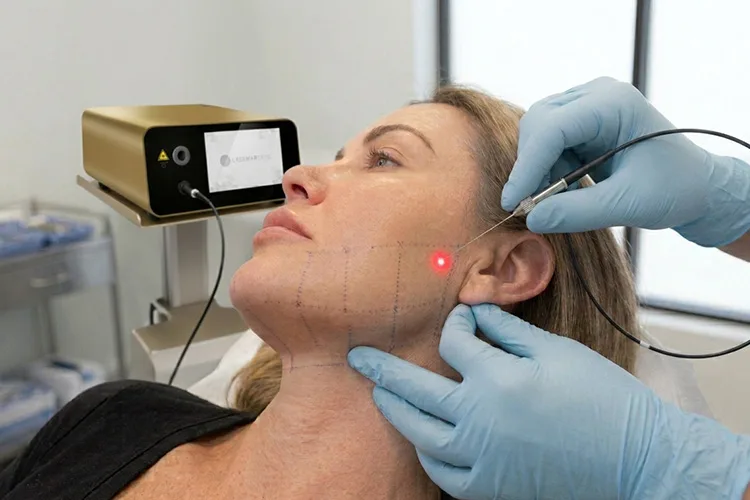
As the skin ages, the decrease in collagen production, loss of elasticity, and accumulation of fat in certain areas can cause the facial oval to lose its definition, leading to the formation of a jowl, sagging in the cheeks, and loosening in the neck area. For individuals who wish to address these changes without surgical intervention, different medical aesthetic applications have come to the fore in recent years.
Endolift is a minimally invasive method that aims to provide skin tightening and contour remodeling by acting on subcutaneous tissues with laser energy. During the procedure, laser energy at a wavelength of 1470 nm is transmitted to the target area under the skin via thin optical fibers. The purpose of the application is to support the reduction of localized fat accumulations in suitable patients, to aim to stimulate collagen production, and to contribute to the skin gaining a firmer and more lifted appearance. While Endolift is particularly preferred in areas such as the facial oval, jawline, jowl, and neck, it can also be evaluated for mild-to-moderate laxity in specific areas of the body in suitable individuals.
Tercih ettiğiniz yapay zekâ aracında, yalnızca bu sayfadaki bilgilere dayalı kısa bir özet oluşturun.
Bu özet yapay zekâ tarafından üretilir, tıbbi tavsiye yerine geçmez. Kesin bilgi için hekiminize danışın.
What is Endolift?
Endolift is a minimally invasive aesthetic application based on applying laser energy to subcutaneous tissues. The micro-scale fibers used during the procedure allow the laser energy to be transmitted to the targeted area in a controlled manner, while the application can be performed without requiring a surgical incision.
Thanks to the controlled thermal effect created by the 1470 nm laser energy in the target tissues, effects aimed at supporting lipolysis in regional fat tissue and collagen production in the skin are targeted. As a result of these effects, a tighter appearance in the skin, definition in the facial contour, and particularly a lifting in the jaw-jowl area are aimed for in suitable patients. The effect of Endolift can vary from person to person. Factors such as age, skin elasticity, the amount of fat tissue, the degree of sagging, the technique used, and the application area are among the elements that affect the treatment outcome.
Is Endolift Considered a Non-Surgical Facelift?
Endolift is frequently described among the public as a "non-surgical facelift." However, Endolift and surgical facelift surgery are not the same procedure. While the skin and deeper tissues are surgically repositioned in a surgical facelift procedure, Endolift aims to create a controlled thermal effect in subcutaneous tissues using laser energy. Therefore, Endolift can be evaluated as a non-surgical or minimally invasive option, particularly in individuals with mild or moderate skin laxity and localized fat accumulation. In individuals with advanced sagging, surgical methods may be a more appropriate alternative.
Does Endolift Really Lift the Face?
One of the primary goals of the Endolift application is to contribute to the tightening of the skin and the support of collagen production by creating a controlled thermal effect in subcutaneous tissues.
Particularly, results such as:
- The jawline appearing more defined,
- The lifting of the jowl area,
- The facial oval becoming clearer,
- The reduction of mild cheek sagging,
- Supporting skin firmness in the neck area can be targeted.
However, "how much it will lift the face" depends on personal characteristics. In prominent and advanced sagging, Endolift should not be expected to yield the same result as a surgical facelift.
Can Endolift Replace Facelift Surgery?
Endolift and surgical facelifts are not direct alternatives to one another. The advantage of Endolift is that it aims to affect subcutaneous tissues with a more limited intervention without requiring a surgical incision and general anesthesia. In contrast, a surgical facelift can provide a more comprehensive correction in individuals with advanced sagging and prominent tissue laxity. Therefore, which method is suitable should not be decided based solely on it being "non-surgical." Factors such as skin elasticity, age, facial anatomy, distribution of fat tissue, and the degree of sagging should be taken into consideration and evaluated.
To Which Areas is Endolift Applied?
Endolift can be evaluated in different anatomical regions. The most frequently discussed application areas are as follows:
Face and Jawline
It can be applied to define the jawline and give the facial oval a more lifted appearance.
Jowl Area
In suitable individuals with localized fat accumulation and mild skin laxity under the chin, improving the contour of the jowl area can be aimed for.
Cheek Area
In individuals with mild sagging and loss of definition in the cheek area, it can be preferred to support the lifting of tissues and to make facial features appear more prominent.
Neck
It can be evaluated toward reducing the appearance of mild skin laxity and wrinkles in the neck area.
Around the Eyes
Under appropriate anatomical conditions, it can be evaluated for certain problems in the under-eye area. However, since the eye contour is a sensitive and anatomically specific region, it is important that the application is planned by an experienced physician.
Body Areas
In suitable patients, mild skin laxity in areas such as the inner thighs, around the knees, upper arms, and around the abdomen can also be included within the scope of evaluation.
How is Endolift Performed?
Before the Endolift application, the physician needs to perform a detailed evaluation. The treatment plan is determined according to the person's skin structure, fat tissue, degree of sagging, and expectations.
1. Examination and Planning
First, the area to be treated is evaluated. Excess fat tissue, skin laxity, and contour problems are identified, and the application areas are planned.
2. Anesthesia
In order to increase comfort during the procedure, appropriate local anesthesia methods can be used in the application area. In some cases, cooling methods can also be utilized.
3. Application of the Optical Fiber
The optical fiber, which is as thin as a strand of hair, is advanced under the skin into the targeted area in a controlled and precise manner.
4. Transmission of Laser Energy
Laser energy at a wavelength of 1470 nm is transmitted to the target tissues. Thermal energy creates a precise effect on the fat tissue and connective tissue in the application area.
5. Collagen and Tightening Effect
The thermal effect generated by the laser is intended to support the production of collagen and the remodeling process of the tissues. Thus, after the procedure, an improvement is aimed for not only in the regional contour but also in skin quality over time.
Is Endolift Sufficient in a Single Session?
How many sessions of Endolift will be applied varies from person to person. While a single session may be sufficient for some individuals, additional applications can be evaluated if needed. It is not correct to set a general rule stating "a single session is definitively sufficient." Prior to the application, a personalized plan should be created by evaluating the person's anatomical features and goals.
How Many Years Does Endolift Remain Effective?
The duration of the tightening and rejuvenation effect seen after Endolift varies from person to person. Since skin aging is an ongoing natural process, the effect of no aesthetic application remains permanent for life. Skin structure, age, lifestyle, sun exposure, and the natural aging process that occurs over time can influence the longevity of the results. Therefore, rather than giving a definitive "duration of effect" applicable to everyone for Endolift, it is a more accurate approach to determine personal results and expectations through a physician's evaluation.
Does Endolift Hurt?
The discomfort felt during Endolift can vary from person to person. Thanks to the local anesthesia or other comfort-enhancing methods applied prior to the procedure, the treatment can be made more comfortable.
After the procedure, within the application area:
- Sensitivity,
- Mild pain,
- Tightness,
- Tenderness to touch may be observed.
The level of these varies according to the area treated and the person's sensitivity.
How Much Does the Face Swell After Endolift?
Mild or moderate swelling can be seen in the treated area after Endolift. Edema, particularly in the face and jaw area, may be more prominent during the first days. Swelling generally decreases over time. However, how long the edema will last depends on personal healing characteristics and the scope of the application. In the event of prominent or progressively increasing swelling, severe pain, fever, discharge, or any other unexpected symptom, the doctor who performed the application should be contacted.
How Many Days Can Swelling Last After Endolift?
Edema, redness, and sensitivity can be seen between the first 24 to 72 hours after Endolift. In most people, these effects progressively decrease. However, the recovery period is not the same for everyone. While some individuals can return to their daily lives in a short time, edema or bruising may continue for a longer period in individuals with a sensitive skin structure.
Can One Go to Work After Endolift?
Endolift is a method that aims to offer a shorter recovery process compared to surgical facelift operations. For this reason, many individuals can return to their daily lives in a short time. Nevertheless, the time to return to work may vary according to the treated area, the scope of the procedure, the person's working conditions, and the degree of edema or bruising that develops. It can be beneficial for individuals having procedures performed particularly on the facial area to take the first few days into consideration when planning their social schedules.
When Does the Face Settle After Endolift?
The initial changes seen after the procedure should not all be evaluated as the final outcome. In the early period, edema and temporary changes in tissues can affect the appearance of facial features. As the edema decreases, the facial contour begins to acquire a more natural appearance. Collagen production and restructuring in the skin can continue over a longer process. Therefore, it is important to comply with the check-up and follow-up process recommended by the physician for the evaluation of Endolift results.
Why Does the Face Feel Stiff After Endolift?
Some individuals may feel stiffness, tightness, or tenderness to touch in the application area after the procedure. This situation may be related to temporary changes occurring in the tissues post-procedure and the healing process. How long the feeling of stiffness will last can vary from person to person. In case of severe pain, prominent discoloration, excessive swelling, or other unusual symptoms, a physician should be consulted.
Does Endolift Lift the Jowl?
One of the most frequently researched areas of use for Endolift is the jowl area. Not only fat accumulation but also skin elasticity, jaw structure, age, and genetic characteristics play a role in jowl formation. Therefore, Endolift can be evaluated for the purpose of improving the contour of the jowl area, particularly in suitable individuals who have localized fat accumulation along with mild skin laxity. In individuals with advanced sagging or excess skin, different treatment options may come to the fore.
Does Endolift Lift the Cheeks?
Endolift can be used toward reducing mild sagging and loss of contour in the cheek area. However, this effect should not be evaluated as a comprehensive tissue lifting procedure as in a surgical facelift operation. The expected outcome varies according to the person's facial anatomy, skin elasticity, and the degree of sagging.
Is Endolift Effective in the Neck Area?
Endolift is among the applications that can be evaluated for mild skin loosening and loss of contour seen in the neck area. Making the jaw-jowl-neck transition more prominent can be particularly targeted. However, if there is advanced skin excess or prominent sagging in the neck, Endolift alone may not be sufficient.
What is the Difference Between Endolift and Facelift Surgery?
|
Feature |
Endolift |
Surgical Facelift |
|---|---|---|
|
Procedure type |
Minimally invasive laser application |
Surgical operation |
|
Incision |
There is no classic surgical incision |
Surgical incisions are present |
|
Anesthesia |
Generally local methods |
Can vary according to the procedure |
|
Recovery |
Generally shorter |
Can be longer |
|
Suitability |
Can be evaluated in mild-to-moderate problems |
Can be preferred in more advanced sagging |
|
Effect |
Tightening and contour improvement are targeted |
More comprehensive tissue repositioning can be provided |
It should not be thought that these two methods yield the same result. Which method is appropriate should be determined according to the individual's examination.
What is the Difference Between Endolift and Ultherapy?
Endolift and Ultherapy are different technologies used for the purpose of skin tightening. While laser energy is transmitted under the skin via an optical fiber in Endolift, focused ultrasound energy is utilized in Ultherapy. Therefore, they differ in terms of energy type, application technique, and target tissues. Which method is more suitable should be evaluated according to the individual's skin structure and treatment goals.
What is the Difference Between Endolift and HIFU?
HIFU uses high-intensity focused ultrasound technology. Endolift, on the other hand, works with laser energy and reaches the target tissues under the skin via a fiber. Although there are situations where both applications are used for skin tightening and improving facial contours, their application mechanisms are not the same.
What is the Difference Between Endolift and Morpheus8?
Endolift and Morpheus8 are also different technologies used to improve skin quality and firmness. Morpheus8 combines microneedling and radiofrequency energy, whereas Endolift transmits laser energy under the skin via an optical fiber. Therefore, the application method and goals of the two treatments are different. Since the person's primary problem depends on different factors such as skin quality, pores, scars, fat accumulation, or sagging, the treatment choice should be personalized.
Who is Endolift Suitable For?
No. As with every medical aesthetic procedure, Endolift is not suitable for everyone.
Particularly:
- Those who are in the pregnancy period,
- Those who are in the breastfeeding period,
- Those with an active infection in the application area,
- Individuals with certain serious or uncontrolled systemic diseases,
- The procedure may not be suitable for individuals with certain autoimmune diseases.
Apart from these, medications used, existing diseases, skin structure, and previously undergone procedures should also be evaluated. Therefore, it is important to perform a detailed physician examination prior to Endolift.
What Are the Advantages of Endolift?
Among the prominent features of Endolift in suitable individuals, the following can be counted:
- Being a more minimal application compared to a surgical facelift procedure,
- Not requiring classic surgical incisions and sutures,
- Localized fat accumulation and skin laxity being able to be evaluated within the scope of the same application,
- Return to daily life generally being faster,
- Being able to be applied in different areas such as the face, jowl, and neck,
- Aiming to support collagen production and restructuring processes in the skin.
However, as in every treatment, advantages should not be evaluated independently of the personal status.
What Are the Side Effects of Endolift?
Temporary side effects may be seen after the procedure. Among these:
- Edema,
- Redness,
- Sensitivity,
- Mild pain,
- Bruising,
- A feeling of tightness or stiffness may take place.
The duration and severity of the side effects may vary depending on personal characteristics. Complying with the physician's recommendations regarding post-procedure care is important for the healthy progress of the healing process.
What Should Be Taken Into Consideration After Endolift?
Personalized recommendations of the physician should be followed after the procedure. Especially in the first days, it is important to protect the application area from trauma, to use the recommended care products, and to act according to the physician's advice regarding intense physical activity. Sun protection also carries importance for skin health. In case an unexpected symptom arises during the recovery process, the person needs to consult the physician who performed the procedure instead of intervening on their own.
How Much is the Price of Endolift Treatment?
The price of Endolift is not a standard treatment fee that can be determined over a single figure.
The primary factors that can affect pricing are as follows:
- The area to be treated,
- The scope of the procedure,
- The fibers and consumables used,
- The application technique,
- The procedure needed by the individual,
- The application conditions of the clinic and the physician.
Therefore, for the current Endolift price, it will be more accurate to make a clear pricing after an examination and personal evaluation.
What Should Be Considered When Choosing a Doctor for Endolift Treatment in Istanbul?
Although the question "Who is the best doctor for Endolift in Istanbul?" is frequently searched on the internet, it is not possible to make an objective ranking that is valid for everyone as the "best doctor" in healthcare services. Before having Endolift or another medical aesthetic application performed, evaluating the following points in doctor selection is important:
- The experience of the physician in the relevant field,
- Planning the application in line with medical necessities,
- The reliability of the technology and consumables used,
- Performing a detailed examination before the procedure,
- Evaluating the expectations of the individual realistically,
- The presence of a post-procedure follow-up and communication process.
In the Medical Aesthetic Clinic serving under Dr. Lida Çiteli, it is also aimed to perform a personal evaluation for the Endolift application and to create a treatment plan suitable for the needs of the individual. The goal here is not merely to apply a certain procedure, but to determine the appropriate approach by evaluating the person's facial and body anatomy, skin structure, current level of sagging or fat accumulation, and expectations together.
As the skin ages, the decrease in collagen production, loss of elasticity, and accumulation of fat in certain areas can cause the facial oval to lose its definition, leading to the formation of a jowl, sagging in the cheeks, and loosening in the neck area. For individuals who wish to address these changes without surgical intervention, different medical aesthetic applications have come to the fore in recent years.
Endolift is a minimally invasive method that aims to provide skin tightening and contour remodeling by acting on subcutaneous tissues with laser energy. During the procedure, laser energy at a wavelength of 1470 nm is transmitted to the target area under the skin via thin optical fibers. The purpose of the application is to support the reduction of localized fat accumulations in suitable patients, to aim to stimulate collagen production, and to contribute to the skin gaining a firmer and more lifted appearance. While Endolift is particularly preferred in areas such as the facial oval, jawline, jowl, and neck, it can also be evaluated for mild-to-moderate laxity in specific areas of the body in suitable individuals.
What is Endolift?
Endolift is a minimally invasive aesthetic application based on applying laser energy to subcutaneous tissues. The micro-scale fibers used during the procedure allow the laser energy to be transmitted to the targeted area in a controlled manner, while the application can be performed without requiring a surgical incision.
Thanks to the controlled thermal effect created by the 1470 nm laser energy in the target tissues, effects aimed at supporting lipolysis in regional fat tissue and collagen production in the skin are targeted. As a result of these effects, a tighter appearance in the skin, definition in the facial contour, and particularly a lifting in the jaw-jowl area are aimed for in suitable patients. The effect of Endolift can vary from person to person. Factors such as age, skin elasticity, the amount of fat tissue, the degree of sagging, the technique used, and the application area are among the elements that affect the treatment outcome.
Is Endolift Considered a Non-Surgical Facelift?
Endolift is frequently described among the public as a "non-surgical facelift." However, Endolift and surgical facelift surgery are not the same procedure. While the skin and deeper tissues are surgically repositioned in a surgical facelift procedure, Endolift aims to create a controlled thermal effect in subcutaneous tissues using laser energy. Therefore, Endolift can be evaluated as a non-surgical or minimally invasive option, particularly in individuals with mild or moderate skin laxity and localized fat accumulation. In individuals with advanced sagging, surgical methods may be a more appropriate alternative.
Does Endolift Really Lift the Face?
One of the primary goals of the Endolift application is to contribute to the tightening of the skin and the support of collagen production by creating a controlled thermal effect in subcutaneous tissues.
Particularly, results such as:
- The jawline appearing more defined,
- The lifting of the jowl area,
- The facial oval becoming clearer,
- The reduction of mild cheek sagging,
- Supporting skin firmness in the neck area can be targeted.
Ancak “yüzü ne kadar toparlayacağı” kişisel özelliklere bağlıdır. Belirgin ve ileri düzeyde sarkmalarda Endolift'in cerrahi yüz germe ile aynı sonucu vermesi beklenmemelidir.
Can Endolift Replace Facelift Surgery?
Endolift and surgical facelifts are not direct alternatives to one another. The advantage of Endolift is that it aims to affect subcutaneous tissues with a more limited intervention without requiring a surgical incision and general anesthesia. In contrast, a surgical facelift can provide a more comprehensive correction in individuals with advanced sagging and prominent tissue laxity. Therefore, which method is suitable should not be decided based solely on it being "non-surgical." Factors such as skin elasticity, age, facial anatomy, distribution of fat tissue, and the degree of sagging should be taken into consideration and evaluated.
To Which Areas is Endolift Applied?
Endolift can be evaluated in different anatomical regions. The most frequently discussed application areas are as follows:
Face and Jawline
It can be applied to define the jawline and give the facial oval a more lifted appearance.
Jowl Area
In suitable individuals with localized fat accumulation and mild skin laxity under the chin, improving the contour of the jowl area can be aimed for.
Cheek Area
In individuals with mild sagging and loss of definition in the cheek area, it can be preferred to support the lifting of tissues and to make facial features appear more prominent.
Neck
It can be evaluated toward reducing the appearance of mild skin laxity and wrinkles in the neck area.
Around the Eyes
Under appropriate anatomical conditions, it can be evaluated for certain problems in the under-eye area. However, since the eye contour is a sensitive and anatomically specific region, it is important that the application is planned by an experienced physician.
Body Areas
In suitable patients, mild skin laxity in areas such as the inner thighs, around the knees, upper arms, and around the abdomen can also be included within the scope of evaluation.
How is Endolift Performed?
Before the Endolift application, the physician needs to perform a detailed evaluation. The treatment plan is determined according to the person's skin structure, fat tissue, degree of sagging, and expectations.
1. Examination and Planning
First, the area to be treated is evaluated. Excess fat tissue, skin laxity, and contour problems are identified, and the application areas are planned.
2. Anesthesia
In order to increase comfort during the procedure, appropriate local anesthesia methods can be used in the application area. In some cases, cooling methods can also be utilized.
3. Application of the Optical Fiber
The optical fiber, which is as thin as a strand of hair, is advanced under the skin into the targeted area in a controlled and precise manner.
4. Transmission of Laser Energy
Laser energy at a wavelength of 1470 nm is transmitted to the target tissues. Thermal energy creates a precise effect on the fat tissue and connective tissue in the application area.
5. Collagen and Tightening Effect
The thermal effect generated by the laser is intended to support the production of collagen and the remodeling process of the tissues. Thus, after the procedure, an improvement is aimed for not only in the regional contour but also in skin quality over time.
Is Endolift Sufficient in a Single Session?
How many sessions of Endolift will be applied varies from person to person. While a single session may be sufficient for some individuals, additional applications can be evaluated if needed. It is not correct to set a general rule stating "a single session is definitively sufficient." Prior to the application, a personalized plan should be created by evaluating the person's anatomical features and goals.
How Many Years Does Endolift Remain Effective?
The duration of the tightening and rejuvenation effect seen after Endolift varies from person to person. Since skin aging is an ongoing natural process, the effect of no aesthetic application remains permanent for life. Skin structure, age, lifestyle, sun exposure, and the natural aging process that occurs over time can influence the longevity of the results. Therefore, rather than giving a definitive "duration of effect" applicable to everyone for Endolift, it is a more accurate approach to determine personal results and expectations through a physician's evaluation.
Does Endolift Hurt?
The discomfort felt during Endolift can vary from person to person. Thanks to the local anesthesia or other comfort-enhancing methods applied prior to the procedure, the treatment can be made more comfortable.
After the procedure, within the application area:
- Sensitivity,
- Mild pain,
- Tightness,
- Tenderness to touch may be observed.
The level of these varies according to the area treated and the person's sensitivity.
How Much Does the Face Swell After Endolift?
Mild or moderate swelling can be seen in the treated area after Endolift. Edema, particularly in the face and jaw area, may be more prominent during the first days. Swelling generally decreases over time. However, how long the edema will last depends on personal healing characteristics and the scope of the application. In the event of prominent or progressively increasing swelling, severe pain, fever, discharge, or any other unexpected symptom, the doctor who performed the application should be contacted.
How Many Days Can Swelling Last After Endolift?
Edema, redness, and sensitivity can be seen between the first 24 to 72 hours after Endolift. In most people, these effects progressively decrease. However, the recovery period is not the same for everyone. While some individuals can return to their daily lives in a short time, edema or bruising may continue for a longer period in individuals with a sensitive skin structure.
Can One Go to Work After Endolift?
Endolift is a method that aims to offer a shorter recovery process compared to surgical facelift operations. For this reason, many individuals can return to their daily lives in a short time. Nevertheless, the time to return to work may vary according to the treated area, the scope of the procedure, the person's working conditions, and the degree of edema or bruising that develops. It can be beneficial for individuals having procedures performed particularly on the facial area to take the first few days into consideration when planning their social schedules.
When Does the Face Settle After Endolift?
The initial changes seen after the procedure should not all be evaluated as the final outcome. In the early period, edema and temporary changes in tissues can affect the appearance of facial features. As the edema decreases, the facial contour begins to acquire a more natural appearance. Collagen production and restructuring in the skin can continue over a longer process. Therefore, it is important to comply with the check-up and follow-up process recommended by the physician for the evaluation of Endolift results.
Why Does the Face Feel Stiff After Endolift?
Some individuals may feel stiffness, tightness, or tenderness to touch in the application area after the procedure. This situation may be related to temporary changes occurring in the tissues post-procedure and the healing process. How long the feeling of stiffness will last can vary from person to person. In case of severe pain, prominent discoloration, excessive swelling, or other unusual symptoms, a physician should be consulted.
Does Endolift Lift the Jowl?
One of the most frequently researched areas of use for Endolift is the jowl area. Not only fat accumulation but also skin elasticity, jaw structure, age, and genetic characteristics play a role in jowl formation. Therefore, Endolift can be evaluated for the purpose of improving the contour of the jowl area, particularly in suitable individuals who have localized fat accumulation along with mild skin laxity. In individuals with advanced sagging or excess skin, different treatment options may come to the fore.
Does Endolift Lift the Cheeks?
Endolift can be used toward reducing mild sagging and loss of contour in the cheek area. However, this effect should not be evaluated as a comprehensive tissue lifting procedure as in a surgical facelift operation. The expected outcome varies according to the person's facial anatomy, skin elasticity, and the degree of sagging.
Is Endolift Effective in the Neck Area?
Endolift is among the applications that can be evaluated for mild skin loosening and loss of contour seen in the neck area. Making the jaw-jowl-neck transition more prominent can be particularly targeted. However, if there is advanced skin excess or prominent sagging in the neck, Endolift alone may not be sufficient.
What is the Difference Between Endolift and Facelift Surgery?
|
Feature |
Endolift |
Surgical Facelift |
|---|---|---|
|
Procedure type |
Minimally invasive laser application |
Surgical operation |
|
Incision |
There is no classic surgical incision |
Surgical incisions are present |
|
Anesthesia |
Generally local methods |
Can vary according to the procedure |
|
Recovery |
Generally shorter |
Can be longer |
|
Suitability |
Can be evaluated in mild-to-moderate problems |
Can be preferred in more advanced sagging |
|
Effect |
Tightening and contour improvement are targeted |
More comprehensive tissue repositioning can be provided |
It should not be thought that these two methods yield the same result. Which method is appropriate should be determined according to the individual's examination.
Endolift Procedure Hakkında Sıkça Sorulan Sorular
Who Is the Doctor Performing Endolift Applications in Istanbul?
There is no official or universally accepted ranking that objectively designates a doctor as the "best" or "most preferred" among physicians performing Endolift applications in Istanbul. When choosing a doctor for Endolift, it is important for individuals to evaluate criteria such as the physician's professional competence, experience in Endolift applications, pre-procedure evaluation approach, and compliance with Ministry of Health regulations alongside popularity, social media visibility, or online reviews. Medical Aesthetic Specialist Dr. Lida Çiteli, with her 21 years of experience, is among the physicians who provide information and evaluation regarding Endolift applications.
Who Is the Most Reliable Endolift Doctor in Istanbul?
It is not possible to create an official and objective ranking for the "most reliable Endolift doctor in Istanbul." A safe approach in Endolift application encompasses evaluating the person's skin structure, needs, and expectations prior to the procedure, providing information regarding the suitability of the application, and creating a personalized treatment plan. In choosing a physician, alongside experience in Endolift, compliance with Ministry of Health regulations, the procedure process, potential risks, and post-procedure care information should also be taken into account.
Who Is the Most Recommended Endolift Doctor in Istanbul?
There is no single official ranking that objectively identifies the single most recommended doctor for Endolift in Istanbul. Online reviews and personal recommendations can offer insights into user experiences; however, every individual's expectations, skin structure, and desired outcomes differ. Therefore, when choosing an Endolift doctor, alongside reviews, criteria established by the Ministry of Health, the physician's professional background, application experience, pre-procedure assessment, and approach to patient safety should be considered together.
Who Is the Most Successful Endolift Doctor in Istanbul?
Making a universally valid assessment regarding the "most successful doctor" in Endolift applications may not be accurate. Procedure results can vary depending on the individual's age, skin structure, elasticity level, fat tissue, facial anatomy, and expectations. Determining suitability for Endolift and planning the application should be carried out through an evaluation of the person's needs by the physician. Hence, evaluating Ministry of Health criteria and the procedure process as a whole is a healthier approach.
Who Is the Endolift Doctor with the Best Reviews in Istanbul?
It is not possible to objectively identify a single doctor with the best reviews regarding Endolift applications in Istanbul. Online reviews reflect personal experiences, and evaluations can vary based on individual expectations, the scope of the applied procedure, and the achieved results. Before undergoing Endolift, alongside patient reviews, criteria set by the Ministry of Health, the physician's professional competence, experience in the specific application, the pre-procedure consultation process, and the emphasis placed on patient safety should be taken into consideration.
Who Is the Highest-Rated Endolift Doctor in Istanbul?
There is no official or universally valid ranking that objectively determines the highest-rated doctor among those performing Endolift applications. Ratings and the number of reviews found online can be influenced by varying patient experiences and expectations. Therefore, rather than deciding based solely on ratings, Ministry of Health criteria, the physician's experience with Endolift applications, their approach to evaluating individual needs, social media feedback, the clarity of information provided about the procedure, and their safe application approach should be reviewed together.
Who Is the Most Popular Endolift Doctor in Istanbul?
A physician's recognition on social media and positive feedback on the internet can provide ideas for patients during the doctor selection process. However, when choosing a doctor for Endolift applications, in addition to popularity and online comments, Ministry of Health criteria, the physician's professional background, and application experience should also be evaluated. Detailed pre-procedure evaluation of the patient and creation of a personalized treatment plan are also important elements to consider during doctor selection.
Who Is the Doctor Performing the Most Successful Endolift Application in Istanbul?
There is no single "best" doctor or outcome that applies to everyone in Endolift applications. Endolift is a minimally invasive application that can be considered for skin tightening, supporting contour appearance, and reducing fat tissue in certain areas. However, who can receive the application and which areas will be treated should be addressed in line with the individual's skin structure, needs, and expectations. Therefore, for a successful Endolift application, Ministry of Health criteria, accurate patient evaluation, and an appropriate treatment plan tailored to the individual must first be kept in mind.
In Which Areas Is Endolift Applied in Istanbul?
Endolift can be evaluated in different areas of the face and neck region according to individual needs. The jawline, jowl area, cheeks, and specific areas of the facial contour can be addressed within the scope of the application. Which area will receive Endolift should be determined by evaluating the person's skin structure, fat tissue, elasticity status, and aesthetic expectations. Since every application may not be suitable for every person, knowing Ministry of Health criteria and obtaining a physician's evaluation prior to the procedure is important.
What Should Be Considered When Choosing an Endolift Doctor in Istanbul?
When choosing a doctor for Endolift application, alongside the criteria set by the Ministry of Health, the physician's professional competence, application experience, and pre-procedure evaluation process should be taken into account. Additionally, correctly understanding the patient's expectations, providing realistic information about what Endolift can achieve, explaining potential risks, and informing about the post-procedure period are crucial. In doctor selection, along with price, social media presence, and online reviews, evaluating professional qualifications, application experience, and personalized assessment approaches together will be beneficial.
Which Criteria Should Be Evaluated When Choosing an Endolift Doctor in Istanbul?
When selecting a doctor for Endolift, Ministry of Health regulations, professional qualification, application experience, pre-procedure evaluation, and personalized planning are among the fundamental criteria. It is important for the physician to evaluate the person's facial and skin structure, explain whether Endolift is suitable, and provide information regarding the method to be used and the overall process. Information provided on potential risks, expected results, and post-procedure care should also be factored into the decision-making process.
What Should Be Considered Before Having an Endolift Application in Istanbul?
Before undergoing Endolift, the person's skin structure, elasticity status, fat tissue, facial anatomy, and aesthetic expectations should be evaluated. How the procedure will be applied by the physician, which areas will be treated, expected results, potential risks, and the recovery process are key factors that must be communicated. Keeping in mind that Endolift may not be suitable for everyone, a physician evaluation must be conducted prior to the procedure.
Why Is the Experience of an Endolift Doctor Important in Istanbul?
The experience of the physician in Endolift applications is crucial for evaluating individual needs and creating an appropriate treatment plan. Because facial anatomy, skin quality, fat tissue, and elasticity vary from person to person, the application approach may also differ accordingly.
Why Is Doctor Selection Important for Endolift Applications in Istanbul?
Selecting the right patient and formulating an appropriate treatment plan are crucial stages of the Endolift application process. It is important for the physician to evaluate the person's needs and expectations, determine whether Endolift is suitable, and provide information on potential risks. Planning and performing the application under suitable conditions by an experienced physician are among the elements to consider for patient safety.
What Are the Most Preferred Endolift Application Areas in Istanbul?
The areas where Endolift application is preferred may vary depending on individual needs. Areas such as the facial oval, jawline, jowl, and cheek regions can be taken into evaluation. However, the same application is not planned in the exact same manner for every individual. The application area and technique should be determined by the physician based on the person's skin structure, existing needs, and expectations.
How Does an Endolift Doctor Create a Personalized Treatment Plan in Istanbul?
When creating a personalized treatment plan for Endolift, the individual's facial and skin structure, elasticity status, fat tissue, current needs, and aesthetic expectations are evaluated first. Subsequently, whether Endolift is appropriate and which regions it can be applied to are determined. By assessing the scope of the procedure, expected outcomes, and potential risks, a suitable application plan is developed for the individual.
Why Is Communication Important When Choosing an Endolift Doctor in Istanbul?
In selecting an Endolift doctor, it is important that the physician listens attentively to the individual and evaluates expectations realistically. Clear communication before the procedure regarding how Endolift will be applied, what results can be anticipated, potential risks, and the recovery period constitutes an essential part of healthy doctor-patient communication. Therefore, experience and reviews about the physician hold great importance in doctor selection.
What Age Group Is Endolift Suitable For?
It is not accurate to set a strict age limit for Endolift based solely on age. Suitability is determined by evaluating the person's skin elasticity, fat tissue, degree of sagging, general health status, and expectations together.
Is an Examination Required Before Endolift?
Yes. Before the procedure, it is important for the physician to evaluate the face and neck region, assess the skin structure, and determine the areas to be treated. In this way, a treatment plan tailored to the person's needs can be formulated.
Which Skin Issues Is Endolift Preferred For?
Endolift can be considered in cases accompanied by mild skin laxity, loss of definition in the facial oval, and localized fat deposits in specific regions. Which specific issue can be treated is determined following a personal examination.
Do Facial Features Become More Defined with Endolift?
In suitable individuals, Endolift can contribute to making the jawline and facial oval appear more defined. The contour change to be achieved may vary according to the person's existing anatomical structure and the treatment area.
How Long Does an Endolift Application Take?
The duration of the procedure varies depending on the size of the application area and the scope of the treatment. Personalized information regarding procedure time can be provided after the clinical examination.
Is the Laser Applied to the Outer Surface of the Skin During Endolift?
In Endolift, laser energy is transmitted to target tissues under the skin via micro-optical fibers. Therefore, its working mechanism differs from applying laser solely to the skin surface.
Can Localized Fat Be Reduced with Endolift?
In appropriate areas, localized fat tissue reduction can be targeted by utilizing the thermal effect of laser energy. However, the procedure is not a weight loss method and is not designed for treating large volumes of fat accumulation.
Does Endolift Improve Skin Quality?
The controlled thermal effect created during Endolift aims to support collagen synthesis and skin restructuring processes. As a result, the skin may appear firmer and more toned in some individuals.
How Is Daily Care Performed After Endolift?
Post-procedure care may vary depending on the individual's skin structure and the treated area. It is important to follow the care products recommended by the physician and adhere to post-procedure instructions.
Can You Exercise After Endolift?
When to resume sports and intense physical activity depends on the scope of the procedure and individual recovery. The physician's recommendations following the procedure should be followed regarding this matter.
Does Endolift Affect Sun Exposure?
Protecting the skin from the sun after the procedure is of great importance. Especially during the healing period, avoiding high sun exposure and using sunscreen products recommended by the physician may be required.
Can Makeup Be Applied After Endolift?
The timeline for returning to makeup can vary based on the treated region and skin condition post-procedure. It may be necessary to avoid applying products until fiber entry points and sensitive areas have completely healed.
Will There Be Scarring After Endolift?
Endolift does not involve traditional surgical incisions or sutures. However, temporary redness or small marks may occur at the fiber entry points. The healing process varies from person to person.
Does Numbness Occur on the Skin After Endolift?
Some individuals may experience temporary sensation changes or sensitivity in the treated region. The duration of such complaints depends on individual healing processes, and a doctor should be consulted in case of unexpected or persistent symptoms.
How Is the Jawline Defined with Endolift?
By reducing appropriate amounts of fat tissue under the chin and supporting the skin-tightening effect, the jawline-to-neck transition can be targeted to look more distinct.
Do Neck Lines Completely Disappear with Endolift?
Endolift can help reduce the appearance of skin laxity and certain wrinkles in the neck region. However, complete disappearance of wrinkles cannot be guaranteed. Results depend on factors such as wrinkle depth and skin elasticity.
Can Endolift Be Performed Alongside Other Aesthetic Applications?
In certain cases, Endolift can be planned in combination with different medical aesthetic procedures. However, which procedures will be combined must be decided by the physician after evaluating skin structure, existing concerns, and safety criteria.
Should Medications Used Before Endolift Be Reported to the Doctor?
Yes. Regularly used medications, known medical conditions, allergies, and previous aesthetic or surgical procedures must be reported to the physician prior to the procedure. This information is critical for treatment planning.
What Should Be Considered Before the Endolift Procedure?
Preparation instructions provided by the physician prior to the procedure must be strictly followed. Informing the doctor about medications and supplements used, as well as active infections or skin issues in the treatment area, is of key importance.
Is a Follow-Up Required After Endolift?
Yes. Adhering to the follow-up schedule set by the physician after the procedure is important for evaluating the healing process and the overall outcome achieved.
Why Do Endolift Results Vary from Person to Person?
Results can be influenced by numerous factors such as age, skin elasticity, facial anatomy, fat distribution, degree of sagging, lifestyle, and application technique. Therefore, before-and-after images found online should not be assumed to show the exact same results for every individual.


