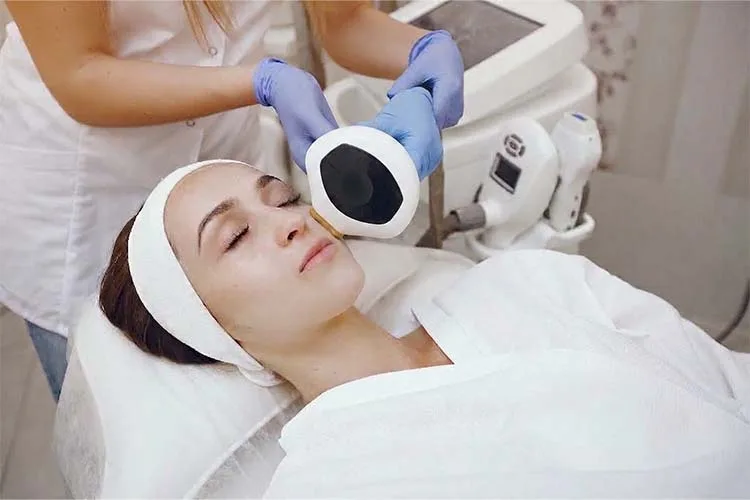
The skin, the body's largest organ, serves as the first line of defense against external factors and is also an indicator of overall health. Therefore, regular skin care is essential not only for aesthetic purposes but also for maintaining the skin barrier and preventing the early signs of aging. Today, the skincare industry is rapidly advancing thanks to technological developments, increasing awareness, and the widespread adoption of personalized treatment approaches. Factors such as sun exposure, the natural aging process, hormonal changes, and genetic predisposition can lead to various skin concerns, including pigmentation, uneven skin tone, fine lines, and birthmarks.
One of the treatment methods used for these skin concerns is the Q-Switched Nd:YAG laser system. This laser technology delivers effective results, particularly in the treatment of pigmentation disorders, tattoo removal, and skin tone correction. Thanks to its high-energy, short-pulse laser beams, it selectively targets melanin deposits in the skin and breaks them down without damaging the surrounding tissues. As a minimally invasive treatment option, the Q-Switched Nd:YAG laser stands out as a safe and controlled method that supports skin rejuvenation. Medical Aesthetics Specialist Dr. Lida Çiteli shared information about the features, applications, treatment protocol, advantages, and frequently asked questions regarding the Q-Switched Nd:YAG laser.
Generate a short summary based only on the information on this page using your preferred AI tool.
This summary is generated by AI and does not replace medical advice. Consult your physician for definitive information.
What Is the Q-Switched Nd:YAG Laser?
The Q-Switched Nd:YAG laser is a laser technology capable of operating at different wavelengths, delivering energy to the skin in ultra-short pulses to create a selective effect on the targeted tissue. The term "Q-Switch" refers to the device's ability to emit high-energy pulses in nanoseconds, allowing it to selectively break down pigments such as melanin (skin pigment) or tattoo ink.
What is Basic Information About the Q-Switched Nd:YAG Laser?
Q-Switched Nd:YAG laser technology is a high-intensity laser system used for the treatment of skin pigmentation, skin rejuvenation, and tattoo removal. Today, it is one of the most widely preferred technologies in the field of medical aesthetics.
What Are the Main Features of Q-Switched Nd:YAG Laser Treatment?
The Q-Switched Nd:YAG laser is a versatile dermatological technology that delivers effective results in both pigment-related skin concerns and skin rejuvenation procedures. By transmitting high-energy pulses in short, controlled bursts, it targets surface pigmentation while simultaneously supporting biological regeneration in the deeper layers of the skin. As a result, it helps eliminate pigmentation issues, improve overall skin quality, and achieve a brighter, healthier, and more even complexion. Its main features include:
- Targets and breaks down both black and colored pigments, allowing the immune system to remove these particles more easily.
- Improves skin brightness by targeting pigmentation issues such as sun damage, age spots, melasma, and freckles.
- Stimulates collagen production, rejuvenates the skin, minimizes pores, corrects uneven skin tone, and enhances the skin's natural radiance.
- Lightens fine facial hair, reducing its visibility and contributing to a clearer skin appearance.
- May help reduce the appearance of superficial blood vessels and, in certain cases, provide supportive treatment for nail fungus.
How Does the Q-Switched Nd:YAG Laser Work?
High Speed – Nd:YAG laser technology delivers pulses at nanosecond speeds, equivalent to one-billionth of a second.
Selective Photothermolysis – It selectively targets only the intended pigment, such as skin discoloration or tattoo ink.
Protection of Surrounding Tissue – Because the laser operates at extremely high speed and selectively targets pigment, it minimizes damage to the surrounding healthy skin tissue.
Mechanical Fragmentation – It breaks pigment particles into tiny fragments that can be engulfed by immune cells and naturally eliminated by the body.
What Are the Wavelengths and Functions of the Q-Switched Nd:YAG Laser?
1064 nm Wavelength – This wavelength penetrates deeper into the skin, making it highly effective for treating dark-colored tattoos and deep pigmentation.
532 nm Wavelength – Primarily effective on superficial skin layers, this wavelength is commonly used to treat red tattoo pigments, sunspots, and freckles.
What Are the Most Common Applications of Q-Switched Nd:YAG Laser Technology?
Tattoo Removal – This laser technology is an excellent non-surgical solution for individuals wishing to remove tattoos, particularly those containing black, navy blue, red, or dark blue pigments.
Pigmentation Treatment – It is also widely used to treat sunspots, freckles, birthmarks, and age-related pigmentation.
Carbon Peeling – Used together with a carbon lotion to tighten pores and regulate oil production.
Melasma Treatment – Helps lighten deep pigmentation caused by hormonal factors or pregnancy while promoting a more even skin tone.
Hair Lightening – Q-Switched Nd:YAG laser technology can also be used to temporarily lighten fine, light-colored hairs that are typically resistant to laser hair removal.
How Is Q-Switched Nd:YAG Laser Treatment Performed?
Q-Switched Nd:YAG laser treatment is a personalized medical procedure planned according to the patient's skin type, the depth and extent of the lesion, and its clinical characteristics. To ensure both effectiveness and safety, the treatment is carried out in carefully controlled stages.
- Preparation and Skin Assessment
Before the procedure, the treatment area is cleansed of makeup, creams, and impurities, then prepared with antiseptic solutions. Depending on the patient's skin sensitivity and comfort needs, a topical anesthetic cream may be applied.
- Laser Parameter Adjustment
The device is adjusted to the appropriate wavelength (1064 nm or 532 nm) and energy level according to the condition being treated. This selection depends on factors such as the type, color, and depth of the pigmentation.
- Mechanism of Action of the Q-Switched Laser
The Q-Switched Nd:YAG laser works by delivering short, high-energy pulses that create a selective photothermal effect within the target tissue. These nanosecond (one-billionth of a second) pulses are selectively absorbed by melanin-rich areas or tattoo pigments. As the energy is absorbed, the pigment particles are fragmented into microscopic pieces, gradually reducing the intensity of discoloration. The surrounding healthy tissues remain largely unaffected throughout this process. The fragmented pigments are then naturally removed over time by immune cells (macrophages). This mechanism allows controlled lightening of pigmentation without causing structural damage to the skin.
How Many Sessions Does Q-Switched Nd:YAG Laser Treatment Require and What Is the Treatment Process Like?
The number of sessions required for Q-Switched Nd:YAG laser treatment varies depending on the treatment area, pigment depth, pigment density, and the patient's skin type. Superficial pigmentation usually requires fewer sessions, whereas tattoo removal and other dense pigment conditions generally require more.
- Number of Sessions: Typically ranges from 3 to 8 sessions, although tattoo removal often requires more.
- Session Intervals: Treatments are generally scheduled every 3 to 4 weeks to allow the skin to heal and the body to eliminate fragmented pigment particles.
- Treatment Duration: Depending on the size of the treatment area, each session usually lasts between 5 and 30 minutes.
What Should Be Considered After Q-Switched Nd:YAG Laser Treatment?
Sun Protection – After treatment, the skin becomes highly sensitive to sunlight. Therefore, it is essential to use a broad-spectrum sunscreen with SPF 50 or higher.
Water Exposure – The treated area should not come into contact with hot water for the first 24 hours after the procedure.
Do Not Pick Scabs – Any small scabs that develop over pigmented or tattoo-treated areas should be left to heal naturally without being picked.
Moisturization – Use the moisturizer recommended by your physician regularly to support the healing process.
Are There Any Side Effects After Q-Switched Nd:YAG Laser Treatment?
Although Q-Switched Nd:YAG laser treatment is generally considered safe, some temporary skin reactions may occur after the procedure. Since the laser works by breaking down pigment within the targeted tissue, mild redness (erythema), pinkness, and slight swelling are expected and usually resolve within a short period.
Some patients may also experience temporary sensitivity or mild crusting in the treated area. These reactions are generally part of the skin's natural healing process and do not cause permanent damage. When performed with appropriate treatment parameters and proper patient selection, the risk of serious side effects is very low.
What Are the Advantages and Disadvantages of Q-Switched Nd:YAG Laser Technology?
Advantages – It does not cause permanent damage to the skin surface, provides fast and effective results, and allows patients to quickly return to their normal daily activities.
Disadvantages – Mild discomfort or a slight stinging sensation may be experienced during the procedure. Multiple treatment sessions may be required to achieve optimal results. Temporary redness or crusting may also occur following treatment.
How Are Q-Switched Nd:YAG Laser Treatment Prices Determined?
The cost of Q-Switched Nd:YAG laser treatment depends on the type of procedure, the size of the treatment area, the depth of the lesion, and the number of sessions required. Since tattoo removal, pigmentation treatment, and skin rejuvenation each require different treatment protocols, pricing varies accordingly. The technology of the laser device, the experience of the practitioner, and the quality standards of the clinic also play important roles in determining the overall cost. Therefore, rather than focusing solely on price, choosing treatment performed with advanced technology under the supervision of an experienced physician is far more important for achieving safe and successful results.
Which Cities Does Dr. Lida Çiteli Provide Q-Switched Nd:YAG Laser Treatment In?
Medical Aesthetics Specialist Dr. Lida Çiteli provides Q-Switched Nd:YAG laser treatments at her clinic in Istanbul. In addition to patients from various cities across Türkiye, she also welcomes international patients traveling for medical tourism.
Acne Therapy About Frequently Asked Questions
Can acne (pimples) be completely treated?
Nowadays, acne formations can be controlled and treated with quite practical and effective methods. Within the scope of treatment, medicated treatment is preferred first. Another effective method in acne/pimple treatment is laser. With laser acne/pimple treatment, acne formations on the skin are treated and acne formation is prevented.
What are the Medications that Affect Acne (Pimple) Formation?
Some medications used may show an increasing effect on the formation of acne (pimples) in the body. These are medications such as cortisone, thyroid, anticonvulsants, disulfiram, isoniazid, azathioprine, etc.
Is Fractional Laser Used in the Treatment of Acne Scars?
Even if the acne problem is controlled with different treatment methods, scars may remain on the skin surface. Fractional laser technology is utilized in the treatment of this situation, which can create aesthetic discomfort. Fractional laser ensures the renewal of this tissue by providing micro-level energy in a controlled manner to the damaged tissue created by acne scars. In this way, while the damaged tissue is eliminated, the formation of healthier and new skin tissue is supported in its place. Depending on the depth and severity of the spots and scars, fractional laser application can generally be repeated in one to five sessions.
Does Squeezing Pimples Really Speed Up the Healing Process?
No. On the contrary, squeezing the pimple negatively affects the healing process. This intervention paves the way for the inflammation to spread deeper under the skin, an increase in the risk of infection in surrounding tissues, and the formation of permanent scars (skars) and spots. The correct cleaning of acne lesions should only be done by specialist physicians under sterile conditions.
Is Nutrition Pattern Important During Acne Treatment?
Nutrition alone does not treat acne; however, some foods can affect acne formation and severity. Especially high-glycemic index foods (foods containing sugar and white flour) and excessive consumption of dairy products in some individuals can trigger acne by increasing hormonal balance and oil production. During the treatment process, a low-glycemic index, balanced, and anti-inflammatory diet can support skin health.
Do Medications Used in Acne Treatment Cause Sun Sensitivity?
Answer: Yes. Some medications and topical products used in acne treatment (especially retinoids, some antibiotics, and acid-containing peelings) can increase the skin's sensitivity to the sun. This situation raises the risk of spot formation due to sunlight. For this reason, it is of great importance to use a high-protection factor and non-comedogenic sunscreen regularly during treatment, regardless of the season.
Who is the Best Doctor Performing Acne (Pimple) Treatment in Istanbul?
The question "Who is the Best Doctor Performing Acne (Pimple) Treatment in Istanbul?" is a topic frequently researched by users. However, in the field of health, superlative expressions such as “the best” are strictly not used due to legislation. Therefore, it is necessary to approach the subject from a more accurate framework. Success in Acne (Pimple) treatment may vary depending on the experience of the physician performing the application, the methods used, and the physical structure of the person. Within the Dr. Lida Çiteli Medical Aesthetic Clinic, a personalized evaluation is made in line with the needs and expectations of the clients, and it is aimed to create the most appropriate treatment plan.