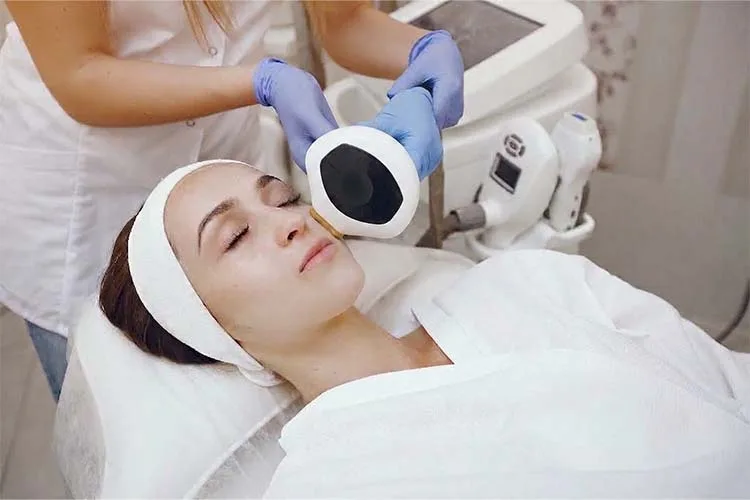
With the increasing pace of life, stress, environmental factors, and the rising importance given to aesthetic appearance today, the need for skin care and rejuvenation procedures reaches a much more critical dimension as time progresses. Acne scars, wounds, post-pregnancy stretch marks, sun spots, wrinkles, and burn scars can lessen a person's self-confidence by affecting physical appearance and can also create negative effects on social life.
Fractional CO2 Laser, which is one of the methods offered by modern medicine to eliminate such skin problems, helps achieve a healthier, smoother, and more youthful appearance by renewing the upper layers of the skin in a controlled manner. Medical Aesthetic Specialist Dr. Lida Çiteli provided information about the usage areas, application method, post-treatment considerations, advantages, and frequently asked questions regarding fractional CO2 laser.
Generate a short summary based only on the information on this page using your preferred AI tool.
This summary is generated by AI and does not replace medical advice. Consult your physician for definitive information.
What is Fractional CO2 Carbon Dioxide Laser Treatment?
Fractional CO2 Carbon Dioxide Laser is a dermatological laser technology that triggers the natural healing process by creating controlled micro-injuries in the skin. Instead of affecting the entire skin, this method works with fractional—that is, point-by-point—shots, contributing to a faster healing process by preserving healthy tissue areas and initiating the regeneration process in the skin.
Used to reduce the appearance of acne, wound and burn scars, skin stretch marks, and signs of aging, this procedure can help the skin gain a smoother and firmer appearance by supporting collagen and elastin production. Planned individually, this method is one of the preferred options in the field of aesthetics and skin rejuvenation with appropriate patient selection and correct application.
What Does Fractional CO2 Laser Do?
Fractional CO2 laser is a skin renewal method that supports natural regeneration and collagen production by creating controlled microchannels in the skin. It can be used particularly to reduce the appearance of acne scars, fine lines, wrinkles, pore appearance, sun damage, certain spots, and stretch marks.
Redness, sensitivity, and peeling that may last for a few days can be observed on the skin after the procedure. Application intensity and healing time vary according to the individual and the treated area. Sun protection is particularly important; improper application or inadequate care can increase the risk of spotting.
Fractional CO2 laser is not suitable for every skin problem. A dermatological evaluation prior to treatment is important, especially in dark skin tones and individuals prone to spotting.
For Which Skin Problems Is Fractional CO2 Laser Used?
Fractional CO2 laser is a laser application that supports controlled skin renewal and collagen production. It can be preferred especially for acne scars, wound and burn scars, fine lines, wrinkles, pore appearance, irregularities in skin texture, and certain sun damages. It can also help reduce the appearance of stretch marks.
However, careful evaluation is required in spot-prone conditions such as melasma; the laser may increase pigmentation problems in some individuals. An evaluation by a dermatology specialist before the procedure is important, especially for dark-skinned or easily spot-prone skin.
Is Fractional CO2 Laser Good for Acne Scars?
Yes. Fractional CO2 laser can be an effective option, especially in reducing the appearance of depressed acne scars and irregular skin texture. The laser supports the healing process and collagen production by creating controlled micro-injuries in the skin.
It can provide significant improvement, particularly in boxcar and rolling-type depressed scars. However, it may not be sufficient on its own for deep and narrow ice-pick scars; it may need to be evaluated in combination with different methods.
As a result of treatment, complete disappearance of scars is not guaranteed, and the required number of sessions varies depending on scar depth, skin type, and the laser settings used.
Does Fractional CO2 Laser Shrink Pores?
Yes, fractional CO2 laser can help reduce the appearance of enlarged pores and make skin texture firmer and smoother. Controlled laser application supports skin renewal and collagen production, allowing the tissue around the pores to tighten.
Pores cannot be completely eliminated; however, it may be possible for them to appear smaller and less noticeable after treatment. Results vary depending on skin type, the cause of the pores, and application intensity.
If there is oiliness or blackheads accompanying the pore problem, the treatment plan may need to be adjusted accordingly.
Does Fractional CO2 Laser Reduce Wrinkles?
Yes. Fractional CO2 laser can help reduce the appearance of fine lines and wrinkles, and help the skin look firmer and smoother. Controlled laser application supports skin renewal and new collagen production.
It can be used especially for signs of aging in the eye area, forehead, upper lip, cheeks, neck, and décolleté area. The effect varies depending on the depth of the wrinkle and the structure of the skin; deep wrinkles may not completely disappear.
Although results are partially noticed immediately after the procedure, they become more pronounced in the following months as collagen production increases. Sun protection and proper skin care are important in maintaining the results obtained.
Does the Face Peel After Fractional CO2 Laser?
Yes, peeling, flaking, and crusting can be seen after fractional CO2 laser. However, the duration and severity of this vary depending on the settings of the laser used, the application area, and the structure of the skin.
Redness, a burning sensation, and swelling may be observed in the first few days. In the following days, superficial peeling may develop starting with dryness and flaking on the skin. It usually begins to decrease within a few days.
During this period, it is important not to pick at the crusts and not to perform chemical peels or scrubs. The skin should be gently moisturized with products recommended by the physician and protected from the sun. If signs of excessive redness, increased pain, discharge, or infection are seen during the healing process, the practitioner physician should be consulted.
How Many Days Does Redness Last After Fractional CO2 Laser?
Redness after fractional CO2 laser usually decreases significantly within a few days. Depending on the intensity of the application and the characteristics of the skin, mild pinkness may last longer.
In the first few days, redness may be accompanied by swelling, warmth, and sensitivity. In the following days, dryness and flaking can be seen on the skin. During the healing period, it is important to avoid peeling, scrubbing, and similar applications that will irritate the skin; to use care products recommended by the physician and to protect against the sun.
If the redness intensifies instead of gradually decreasing, or if significant pain, blistering, discharge, or infection signs develop, the practitioner physician should be consulted.
Can You Go to Work After Fractional CO2 Laser?
Yes, but the time to return to work varies depending on the intensity of the laser and your job. Since redness, sensitivity, swelling, and flaking may be seen in the first few days, resting for a few days may be more comfortable, especially for face-to-face jobs.
A return to daily life can occur earlier in desk jobs or work-from-home setups. In contrast, greater care should be taken in jobs exposed to sun, dust, heat, and intense physical activity until healing is complete.
During the period of returning to work, it is important not to irritate the skin, to apply the care recommended by the physician, and to protect against the sun. Particularly regarding makeup use and sunscreen application, the practitioner physician's instructions must be followed.
Can Fractional CO2 Laser Be Done in Summer?
Fractional CO2 laser can also be applied during the summer months, but careful planning is required as the risk of spot development is higher due to sun exposure. For this reason, many physicians prefer to leave the procedure for autumn and winter months, especially during periods of intense sunlight.
After the procedure, the skin becomes more sensitive to UV rays. Avoiding the sun, using appropriate sun protection, and following the care program recommended by the physician helps reduce potential color changes.
Whether the procedure needs to be performed in summer should be decided by evaluating your skin type, the area to be treated, the intensity of the laser, and your daily sun exposure. A dermatology evaluation is particularly important in spot-prone or dark skin types.
Does Fractional CO2 Laser Hurt?
During fractional CO2 laser, a feeling similar to stinging, warmth, or a rubber band snapping may occur. The discomfort felt varies depending on the intensity of the laser used, the application area, and the person's pain threshold.
Local anesthetic cream applied before the procedure and cooling methods used during the procedure help reduce discomfort. After the procedure, a burning and warmth sensation that can last for a few hours may be observed.
Usually, the discomfort is at a manageable level; however, the pain felt and subsequent sensitivity may increase in more intense applications.
How Many Sessions of Fractional CO2 Laser Are Performed?
The number of sessions in fractional CO2 laser varies according to skin type, the problem treated, and the intensity of the laser. The same number of sessions is not applied to every person.
Generally, 1–2 sessions may be sufficient for mild skin rejuvenation and fine lines, while several sessions may be needed for acne scars and significant tissue irregularities. In deep scars, the treatment plan is determined individually.
Time must be allowed between sessions for the skin to recover and regenerate. The exact number of sessions and interval should be determined after the dermatology specialist's skin evaluation. Results may become more pronounced not only during the initial healing period, but also in the following months with developing collagen production.
What is the Basic Information About Fractional CO2 Laser?
Fractional CO2 Laser sends microscopic beams to the skin surface, creating controlled destruction in this way. It renews the upper layer of the skin and acts by triggering collagen production in its lower layers. It is a widely used medical aesthetic treatment today. Unlike classic laser devices, fractional CO2 laser, which can be applied point-by-point as microchannels instead of the whole skin, preserves surrounding healthy tissues. This significantly increases the healing process.
In Which Conditions Is Fractional CO2 Laser Treatment Used?
Acne, Wound, and Scar Marks: Especially for pitted (atrophic) acne scars referred to as "pitted"; it contributes to gaining a smoother appearance of the skin surface in scar tissue formed after surgery, accidents, trauma, and burns.
Stretch Marks (Striae): In stretch mark areas developed due to pregnancy or weight changes, it supports the restructuring of skin tissue by stimulating collagen production and helps reduce their appearance.
Wrinkles and Skin Rejuvenation: It is effective in skin rejuvenation applications aimed at reducing the appearance of fine wrinkles and increasing skin elasticity, generally in areas such as around the eyes and corners of the mouth.
Skin Tightening and Loss of Elasticity: It contributes to the formation of a firmer and more toned skin structure by reducing the appearance of mild sagging due to decreased skin elasticity.
Sun Damage, Spots, and Pore Problems: It lays the groundwork for a more even-toned and smooth skin appearance by helping reduce the appearance of sun damage-related spots, pigmentation issues like melasma, and enlarged pores.
Skin Tone Inequality: It helps eliminate color irregularities in the skin and forms a more homogeneous skin tone appearance.
How is Fractional CO2 Laser Treatment Applied?
Preparation Phase
Before the procedure, the application area is cleaned and the skin is purified from makeup, oil, and dirt residue. In order to reduce pain, local anesthetic cream is generally applied and awaited for about 30–45 minutes for effectiveness to be achieved.
During the Procedure
During laser application, microbeams are sent to the skin surface in a controlled manner. Patients can usually describe a mild stinging, warmth, or prickling sensation. When necessary, cooling systems or cold air blowing devices can be used to reduce this sensation.
Mechanism of Action
Fractional (point-by-point) CO2 laser creates microscopic treatment zones (MTZ – Microthermal Treatment Zones) by sending controlled microbeams to the skin surface, causing point-by-point (fractional) micro-damage. Thanks to this structure, surrounding healthy tissues are preserved, the skin's natural repair process is activated, and a fast and regular healing process is supported by increasing collagen production.
How is the Healing Process and Return to Social Life After Fractional CO2 Laser?
Due to the peeling effect of the treatment on the skin, a gradual healing process is experienced after fractional CO2 Laser.
- In the first 24-hour period after treatment, an intense sunburn sensation is experienced. It is considered normal for redness or edema to occur in the area. During this period, the skin should strictly not be brought into contact with water.
- Between the third and fifth days, dryness, tightness, and micro-crusting are observed on the skin. The person must strictly not pick at these crusts and should wait for them to shed on their own.
- Between seven and ten days, the crusts will have completely shed. A pink, fresh, and smooth skin appearance emerges under the shed crusts. The patient can easily continue their social life during this period.
- Radiance is seen on the skin surface immediately following treatment. However, definitive results appear after collagen synthesis is completed. This may take 3 to 6 months. After this time, final results emerge.
What Should Be Considered After Fractional CO2 Laser Treatment?
The period after fractional CO2 laser application is at least as important as the procedure itself in terms of the effectiveness of the treatment and healthy progression of skin healing. This period, which usually covers the first 7–10 days, forms the beginning of the healing timeline.
- Cold Application: Cold compresses can be applied intermittently to reduce burning and sensitivity that may occur in the first days after the procedure.
- Moisturizing and Skin Repair: Repairing and moisturizing creams recommended by the physician should be used regularly, and care should be taken to support the skin barrier.
- Sun Protection: Since the skin is quite sensitive during this period, the use of SPF 50+ sunscreen is important. Avoiding direct sunlight helps reduce the risk of spot formation (hyperpigmentation).
- Crusting Process: Fine crusting that may form a few days after the procedure is a natural healing process. These crusts should not be interfered with and should be expected to shed spontaneously.
What is the Number of Sessions and Application Time for Fractional CO2 Laser?
- Although it varies depending on the depth of the problems in the skin, fractional CO2 laser treatment is planned as three to six sessions.
- Intervals of four to six weeks are left between sessions for the skin to recover itself.
- In order to prevent spot formation after treatment, the treatment is applied in autumn and winter seasons when sun rays are less.
- High SPF value sunscreen creams should be used when going outside following the procedure.
Is the Effect of Fractional CO2 Laser Treatment Permanent?
The effect of fractional CO2 laser treatment is largely permanent. Because the application creates controlled micro-injury in the skin, increasing collagen and elastin production, thus providing long-term renewal in the skin tissue. Improvements achieved especially in acne scars, fine wrinkles, and skin surface irregularities are generally permanent in nature.
However, the concept of "permanence" in anti-aging applications should be evaluated together with the natural and unstoppable aging process. As the skin continues to be exposed to gravity, UV rays, and environmental factors, new wrinkles and loss of elasticity may develop over time. High-factor sunscreen use, antioxidant-containing skincare routines, and maintenance sessions planned according to the physician's recommendation play an important role in preserving the achieved rejuvenation effect for a longer period.
To Whom Is Fractional CO2 Laser Not Applied?
It is not applied to people who have an active infection, herpes, or open wound on their skin. It is not applied to mothers during pregnancy and to people who have sunbathed intensely or used a solarium in the last month.
What Are the Types of Fractional Laser Treatment?
Fractional lasers are essentially systems that provide regeneration by creating controlled micro-damage in the skin, and they are divided into two main groups according to the type of energy used:
- Ablative Fractional Lasers (CO2 and Er:YAG): Provide a more pronounced renewal by performing controlled vaporization (ablation) in the upper layer of the skin. They show a stronger effect especially on deep wrinkles, acne scars, and prominent scar tissue; however, the healing time is longer compared to non-ablative methods.
- Non-Ablative Fractional Lasers: Stimulate collagen production by creating a heat effect in the dermis layer without peeling the skin surface. They are preferred in milder skin problems, fine wrinkles, and tone inequalities, and the healing time is shorter.
What Are the Advantages of Fractional CO2 Laser Treatment?
Fractional CO2 laser is an effective method providing results in skin renewal and repair processes, offering various advantages:
- Thanks to the controlled micro-thermal damage areas it creates in the skin, it activates the natural healing mechanism and stimulates new collagen formation (neocollagenesis).
- Thanks to "Fractional" technology, laser beams are delivered in micro-spots rather than to the entire skin. Healthy tissues between these spots accelerate the healing process, allowing the patient to return to daily life in a shorter time.
- With a single device, different aesthetic and medical problems such as acne scars (scarring), deep wrinkles, sun damage, stretch marks (striae), and enlarged pores can be treated simultaneously.
- The results of the treatment are not limited to the moment of application. Since collagen restructuring continues for 3 to 6 months, skin quality reaches a better point as time passes.
- The depth, intensity, and scanning area of the laser can be precisely adjusted according to the patient's skin type and the depth of the problem. This condition increases the safety level and success rate of the treatment.
- It not only removes superficial roughness, but also helps the skin look tighter and firmer by shortening the fibers in the lower layers of the skin.
What Are Fractional CO2 Laser Treatment Prices?
Fractional CO2 laser application prices may vary depending on the size of the area to be treated, the depth of the skin problem, the required number of sessions, and the technical specifications of the device to be used. In addition, the equipment of the health institution where the procedure is performed and the experience of the practitioner physician are among the factors affecting the cost. For the application to yield safe and effective results, the procedure must strictly be planned under the supervision of a dermatology specialist and a personalized treatment protocol should be created.
Which Provinces Do We Provide Fractional CO2 Laser Treatment Services To?
Medical Aesthetic Specialist Dr. Lida Çiteli provides Fractional CO2 Laser treatment services in her clinic in Istanbul to patients applying from different provinces of Turkey, as well as clients coming from abroad within the scope of health tourism.
Fractional Co2 Laser About Frequently Asked Questions
Are There Any Side Effects of Fractional CO2 Laser Application?
The side effects of Fractional CO2 laser applications are generally part of a controlled healing process. Temporary reactions such as redness, edema (swelling), a sensation of heat, and sensitivity are expected following the procedure. These symptoms usually reach their peak within the first 24–48 hours, then subside within 3–7 days as the skin regenerates, eventually disappearing with mild peeling. Since temporary hyperpigmentation (spotting) or infection risks may rarely develop, following expert recommendations during the recovery process and being diligent about sun protection contributes to a smoother experience.
What Are the Differences Between Ablative and Non-Ablative Effects?
The fundamental difference between ablative and non-ablative lasers is the depth and intensity of the effect on the epidermis, the outermost layer of the skin. While classic ablative lasers provide deeper rejuvenation by controlled peeling of the skin surface, the recovery period can be relatively longer. In contrast, Fractional CO2 laser creates microscopic treatment areas in specific zones rather than affecting the entire skin, thereby preserving the surrounding healthy tissue. Thanks to this "fractional" effect, the skin's natural repair mechanisms are activated, the healing process progresses faster, and the individual can return to daily life in a shorter time.
Who Is Suitable for Fractional CO2 Laser?
Fractional CO2 laser treatment is generally preferred for individuals who are over 18 years old, in good general health, and have concerns such as acne scars, sun or age-related spots, wrinkles, and skin stretch marks.
In Which Situations Should Fractional CO2 Laser Not Be Performed?
Fractional CO2 laser application is not recommended or may need to be postponed in certain cases. This procedure is not suitable for individuals with active skin infections (e.g., herpes/cold sores), during pregnancy or breastfeeding, those with a predisposition to hypertrophic scars or keloids, or those who have used systemic isotretinoin within the last 6 months.
Furthermore, it requires careful evaluation for patients with bleeding-clotting disorders, immunocompromised individuals, and those using medications that cause photosensitivity. Therefore, a detailed assessment by a dermatology specialist prior to the procedure is essential to identify potential risks and ensure appropriate patient selection.
How Long Does the Recovery Take for Fractional CO2 Laser?
The recovery process after a Fractional CO2 laser application progresses in stages. Within the first few hours after the procedure, redness and sensitivity occur. This is followed by a period of mild crusting and superficial peeling, typically lasting 3–7 days. During this stage, the skin begins to renew itself, and a significant refreshment in appearance is achieved. However, the primary effect of the laser emerges through increased collagen production beneath the skin. This biological renewal process continues over time, and skin tightening, smoothing, and tissue improvement generally become evident within 3–6 months.
Is Fractional CO2 Laser Treatment Painful?
Since Fractional CO2 laser works on the principle of delivering controlled thermal energy to the deeper layers of the skin, it may create sensations described as heat, burning, or stinging during the application. The intensity of this sensation can vary depending on the patient's pain threshold, the application area, and the penetration depth of the procedure.
Local anesthetic creams applied approximately 30–45 minutes before the procedure and cooling systems used during the process significantly reduce this sensation, increasing patient comfort. Following the treatment, redness and sensitivity similar to a sunburn may be observed, lasting from a few hours to a few days. This is a temporary part of the healing process that can be managed with appropriate moisturizing care and cold compress applications.
Who Is the Most Preferred Fractional CO2 Laser Doctor in Istanbul?
The question “Who is the most preferred Fractional CO2 Laser doctor in Istanbul?” is frequently searched by users. However, in the healthcare field, expressions indicating superiority, such as “the best,” should not be used definitively. Such wording is also not in compliance with the regulations of the Ministry of Health.
Choosing a doctor depends on many factors, including their experience with Fractional CO2 Laser treatments, professional qualifications, treatment approach, and commitment to patient safety. Therefore, when choosing a doctor, factors such as their professional background, experience with Fractional CO2 Laser treatments, and pre-treatment evaluation process are as important as popularity or the number of online reviews.
Who Is the Most Reliable Doctor Providing Fractional CO2 Laser Treatment in Istanbul?
The question “Who is the most reliable doctor providing Fractional CO2 Laser treatment in Istanbul?” is frequently searched by users. However, in the healthcare field, expressions indicating superiority, such as “the best,” should not be used definitively. Such wording is also not in compliance with the regulations of the Ministry of Health.
In a reliable treatment process, it is important for the doctor not only to perform the procedure but also to evaluate the patient’s skin type, skin concerns, and expectations beforehand. The suitability of the laser technology and treatment parameters, the conditions under which the procedure is performed, the explanation of potential risks, and the development of a treatment plan tailored to the individual’s needs are among the main factors to consider when choosing a doctor.
Who Is the Most Recommended Fractional CO2 Laser Doctor in Istanbul?
The question “Who is the most recommended Fractional CO2 Laser doctor in Istanbul?” is frequently searched by users. However, in the healthcare field, expressions indicating superiority, such as “the best,” should not be used definitively. Such wording is also not in compliance with the regulations of the Ministry of Health.
Patient reviews and personal recommendations may provide an idea about a doctor; however, each patient’s skin type, skin concerns, expectations, and results may differ.
Therefore, when evaluating recommendations, it is advisable to also consider criteria such as the doctor’s experience with Fractional CO2 Laser treatments, treatment approach, and commitment to patient safety.
Who Performs the Most Successful Fractional CO2 Laser Treatments in Istanbul?
The question “Who performs the most successful Fractional CO2 Laser treatments in Istanbul?” is frequently searched by users. However, in the healthcare field, expressions indicating superiority, such as “the best,” should not be used definitively. Such wording is also not in compliance with the regulations of the Ministry of Health.
Treatment outcomes may vary depending on the individual’s skin type, skin concerns, needs, expectations, and treatment plan. At the foundation of a successful treatment is determining whether the individual is an appropriate candidate for Fractional CO2 Laser treatment and establishing realistic expectations.
Who Is the Fractional CO2 Laser Doctor with the Best Reviews in Istanbul?
The question “Who is the Fractional CO2 Laser doctor with the best reviews in Istanbul?” is frequently searched by users. However, in the healthcare field, expressions indicating superiority, such as “the best,” should not be used definitively. Such wording is also not in compliance with the regulations of the Ministry of Health.
Online reviews may provide insight into patients’ experiences, but they should not be considered the sole criterion when choosing a doctor. In addition to reviews, the doctor’s professional background, experience with Fractional CO2 Laser treatments, the laser technology used, and the approach to pre-treatment consultation should also be evaluated.
Who Is the Highest-Rated Fractional CO2 Laser Doctor in Istanbul?
The question “Who is the highest-rated Fractional CO2 Laser doctor in Istanbul?” is frequently searched by users. However, in the healthcare field, expressions indicating superiority, such as “the best,” should not be used definitively. Such wording is also not in compliance with the regulations of the Ministry of Health.
User ratings, the number of reviews, and patient expectations may vary.
Therefore, rather than focusing solely on ratings, it is important to consider the doctor’s experience with Fractional CO2 Laser treatments, medical approach, and whether they develop an individualized treatment plan.
Who Is the Most Popular Fractional CO2 Laser Doctor in Istanbul?
The question “Who is the most popular Fractional CO2 Laser doctor in Istanbul?” is frequently searched by users. However, in the healthcare field, expressions indicating superiority, such as “the best,” should not be used definitively. Such wording is also not in compliance with the regulations of the Ministry of Health.
When choosing a doctor, professional experience, treatment safety, the patient evaluation process, and transparency regarding realistic outcomes are important factors, in addition to social media presence, the number of reviews, or the number of followers.
Who Provides the Most Successful and Best Fractional CO2 Laser Treatments in Istanbul?
The question “Who provides the most successful and best Fractional CO2 Laser treatments in Istanbul?” is frequently searched by users. However, in the healthcare field, expressions indicating superiority, such as “the best,” should not be used definitively. Such wording is also not in compliance with the regulations of the Ministry of Health.
The success of the treatment should be evaluated in relation to the individual’s skin type, skin concerns, needs, and expectations.
For example, the needs of a person with enlarged pores and fine lines may differ significantly from those of someone with prominent acne scars or deep wrinkles. Therefore, the individual’s skin characteristics should first be assessed, and it should be determined whether Fractional CO2 Laser treatment is appropriate.
What Should You Consider When Choosing a Fractional CO2 Laser Doctor in Istanbul?
Before undergoing Fractional CO2 Laser treatment, factors such as the doctor’s professional qualifications, experience with the procedure, and approach to patient evaluation, as well as the volume of reviews they receive on social media, may be considered. In addition, the conditions of the healthcare facility where the procedure will be performed, the suitability of the laser device used, and treatment safety are also important.
It is also important for the doctor to listen to your expectations before the procedure and evaluate whether Fractional CO2 Laser treatment is appropriate for you.
What Criteria Should Be Considered When Choosing a Fractional CO2 Laser Doctor in Istanbul?
When choosing a doctor, their professional background, experience with Fractional CO2 Laser treatments, pre-treatment evaluation process, and approach to patient safety should be considered together.
It is also important for the doctor to clearly explain the expected results and potential risks, provide information about the laser technology to be used, and create an individualized treatment plan.
What Should You Consider Before Undergoing Fractional CO2 Laser Treatment in Istanbul?
Before the procedure, it should be evaluated whether Fractional CO2 Laser treatment is suitable for your skin type and individual needs. The doctor should provide information about how the procedure will be performed, which areas will be treated, the laser parameters to be used, the expected results, and potential side effects.
You should also receive the necessary information regarding post-treatment care, sun protection, and the recovery process, and follow your doctor’s recommendations.
Why Is a Fractional CO2 Laser Doctor’s Experience Important in Istanbul?
In Fractional CO2 Laser treatment, the treatment area and laser parameters may be determined according to the individual’s skin characteristics. A doctor’s experience can contribute to accurately assessing the patient’s skin type, skin concerns, and treatment needs.
However, experience alone is not sufficient; appropriate patient selection, a suitable treatment plan, and realistic expectations are also important components of a successful approach.
Why Is Choosing the Right Doctor Important for Fractional CO2 Laser Treatments in Istanbul?
With Fractional CO2 Laser treatment, it is important not only which laser device is used, but also on whom, on which area, at what intensity, and for what purpose it is used. A detailed assessment of the individual’s skin characteristics and expectations allows the doctor to develop an appropriate, personalized treatment plan. A safe approach also includes avoiding unnecessary procedures when they are not medically or aesthetically indicated for the individual.
How Does a Fractional CO2 Laser Doctor in Istanbul Create an Individualized Treatment Plan?
The doctor first evaluates the individual’s skin characteristics, existing skin concerns, skin type, needs, and aesthetic expectations. They then determine whether Fractional CO2 Laser treatment is appropriate and which areas should be treated.
The laser intensity, treatment areas, and session plan may also be determined based on this evaluation. This allows for a treatment approach tailored to the individual’s skin characteristics and needs rather than a standardized procedure.
Why Is Communication Important When Choosing a Fractional CO2 Laser Doctor in Istanbul?
Good doctor-patient communication during Fractional CO2 Laser treatment is important for setting realistic expectations. The doctor should listen to you, understand what you want, and clearly explain the results that Fractional CO2 Laser treatment can realistically achieve. Before the procedure, it is also important to clearly discuss the potential risks, the recovery process, the treatment session plan, and the precautions that should be taken after the procedure, as these are all essential parts of a safe treatment process.